
Oil, Supply Disruptions, and What Markets May Be Missing
The conflict involving Iran, and the resulting concerns around the Strait of Hormuz, have raised fresh questions about global oil supply.
We are starting to see early signs of strain in inventories, with more frequent day-to-day drawdowns showing up in the data.
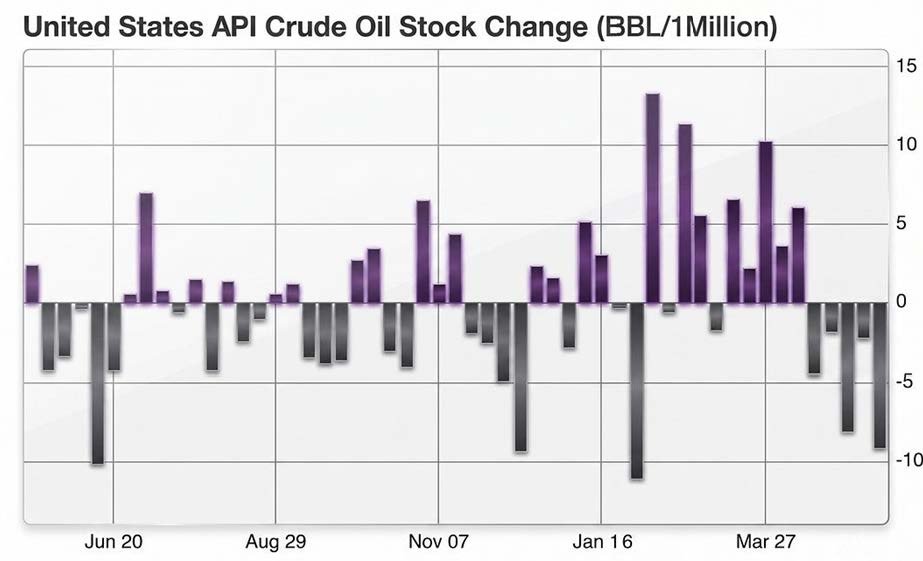
Source : Trading Economics chart using American Petroleum Institute (API) data retrieved – May 19, 2026
Provided for informational purposes only. Third-party information is believed to be reliable, but we do not guarantee its accuracy or completeness. This commentary is general in nature and is not intended as investment advice or a recommendation to buy or sell any security.
If supply remains below demand, that imbalance could put upward pressure on prices. In my view, the market may not yet be fully pricing in that risk, although it may be starting to show up in the December 2026 futures contract.
According to Dr. Sultan Al Jaber, UAE Minister of Industry and Advanced Technology and ADNOC executive, “even if the conflict were resolved quickly, a full recovery in oil flows could still take time.” Bloomberg reported this week that he said it could take at least four months to recover to roughly 80% of pre-conflict flows, with a full return potentially taking longer.
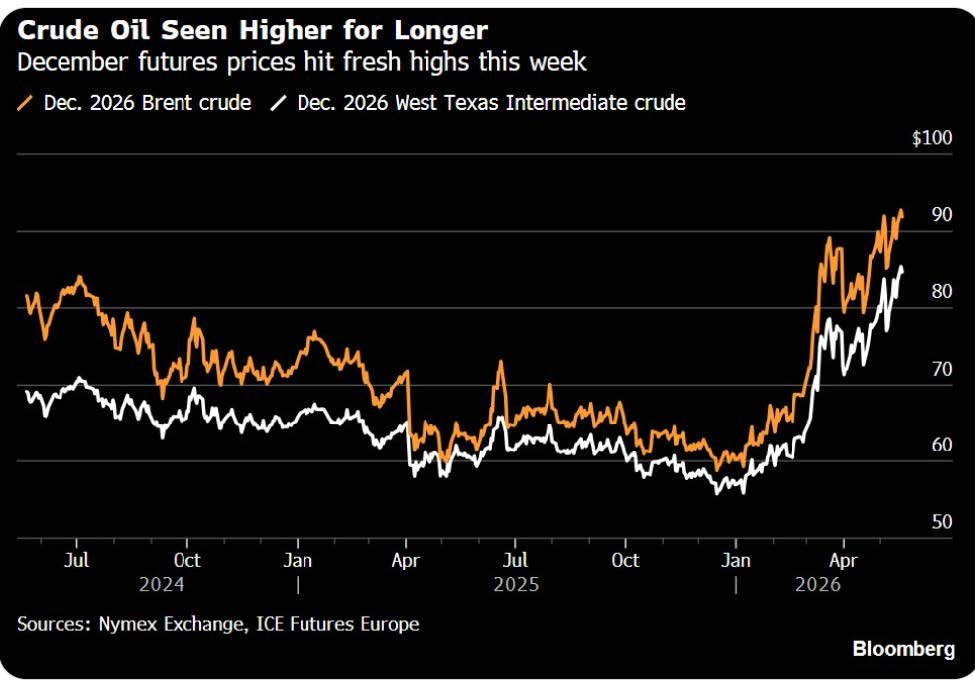
Sourced May 19, 2026. Provided for informational purposes only. Third-party information is believed to be reliable, but we do not guarantee its accuracy or completeness. This commentary is general in nature and is not intended as investment advice or a recommendation to buy or sell any security.
Oil matters far beyond the energy sector. If prices move higher and stay there, the effects can spread through the broader economy.
Transportation, production, and input costs often rise alongside oil, which can then influence the price of other commodities over time, including base metals, food, and grains.
That does not mean every commodity will rise in lockstep, but it does mean investors should pay attention to how energy shocks can ripple through the cost of living.
Our go-anywhere portfolio has the flexibility to seek exposure across asset classes, including areas that may help offset some of the impact of rising commodity prices.
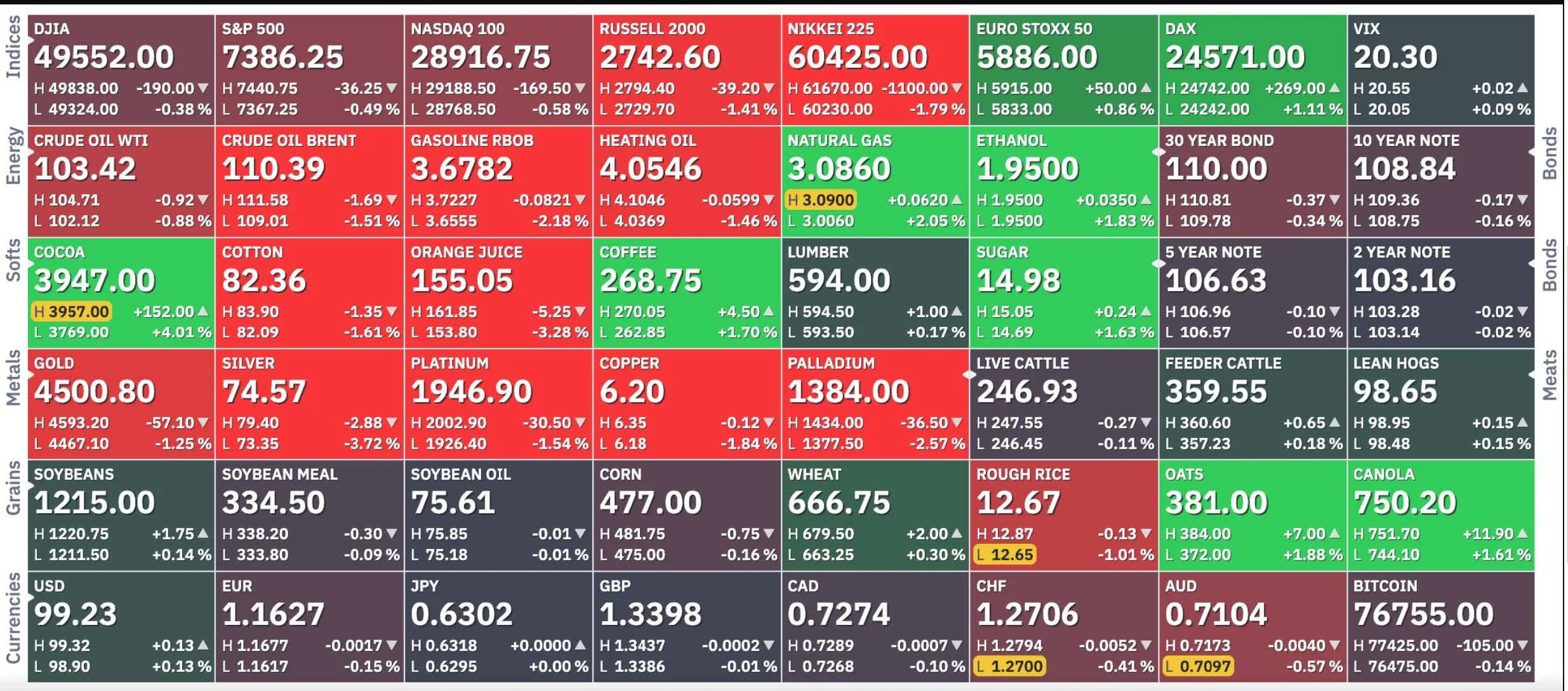
Source: Wall Street Trader Pro, accessed May 2026.
Provided for informational purposes only. Third-party information is believed to be reliable, but we do not guarantee its accuracy or completeness. This commentary is general in nature and is not intended as investment advice or a recommendation to buy or sell any security.
The table below reflects trend signals published by Hedgeye Risk Management as of May 19, 2026. The signals below are short-horizon technical observations published by a third-party research provider. They are one input among many in our research process, are not necessarily Red Barn views, are not recommendations, and may not align with positioning in any client portfolio. Individual securities and commodities mentioned may not be suitable for your circumstances.
Tactical Trend Changes📈
Technical trends are analytical observations and do not guarantee future results
Silver……… Bullish to Bearish
Natural Gas……….. Neutral to Bullish
Gold Miners………. Neutral to Bearish
Uranium…… Neutral to Bearish
Consumer Staples…….. Neutral to Bullish
Source Hedgeye Risk Management – retrieved May 19, 2026, 2026
Bullish: a view that the price of a security or market may rise, subject to significant uncertainty and risk of loss. Bearish: a view that the price may fall, subject to significant uncertainty and risk of loss. Neutral: a view that the price may remain relatively stable. These terms reflect third-party and/or general market views and are not recommendations or predictions.